Flip Culture: When Fan Merch Stops Being a Souvenir and Starts Being a Stock Portfolio
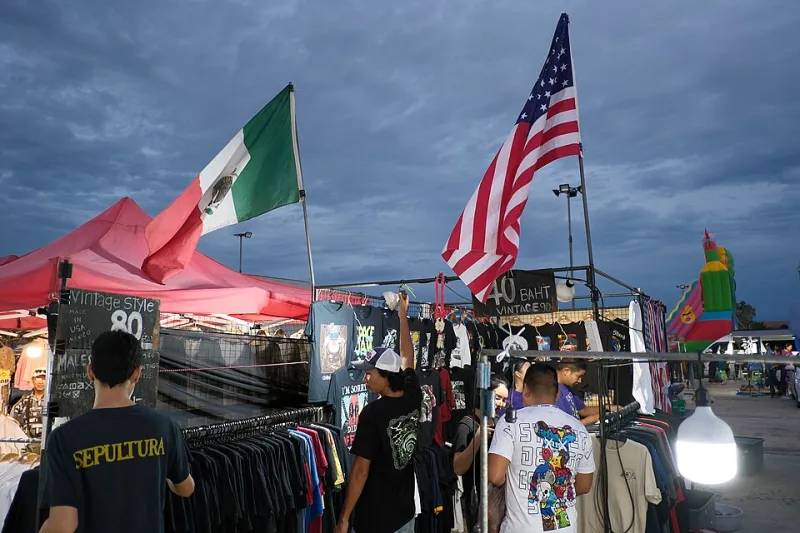
Photo: PattayaPatrol, CC BY-SA 4.0, via Wikimedia Commons
Somewhere in a climate-controlled closet in Austin, Texas, a 24-year-old named Marcus has $11,000 worth of merch he's never worn. Not because he doesn't love the pieces — he does, deeply — but because wearing them would be a financial mistake.
There's a hoodie from a limited creator drop that retailed at $65. It's listed on Depop right now for $340. There's a tour tee from a mid-size indie band that sold out in eight minutes; Marcus paid $40 and has been offered $220. And there's a single embroidered crewneck from a YouTube-adjacent brand that, according to recent comps on Grailed, is quietly appreciating like a blue-chip stock.
Marcus isn't unusual anymore. He's early.
The Resale Economy Grew Up Without Anyone Noticing
The secondary market for streetwear and sneakers has been documented to death at this point — StockX turned sneaker resale into a literal stock exchange, complete with bid/ask spreads. But what's newer, and frankly more interesting to the fandom community, is the parallel economy forming around creator merch and limited-edition fandom drops.
Depop, Grailed, eBay, and even Facebook Marketplace have become the trading floors for this niche. And unlike the hyped sneaker market, which has become increasingly institutionalized and speculative, the merch resale space still has the feel of a genuine collector's market — driven by emotional connection as much as financial calculation.
The math, when it works, is striking. A 2022 drop from a mid-tier Twitch streamer — 200 units of a single-color tee, no restock announced — was selling on secondary within three months at 6x retail. A limited run from a popular podcast's fifth anniversary sold out in under two hours and now trades at a consistent 4x on Depop. These aren't outliers. They're becoming a pattern.
What Makes Merch "Investable"
Not all merch appreciates. Most of it doesn't. The difference between a piece that becomes a secondary market asset and one that ends up in a Goodwill bin comes down to a handful of factors that serious collectors have learned to read like market signals.
True scarcity. Not "limited" as a marketing word — actually limited. Sub-500 units, no restock, no digital equivalent. The supply ceiling has to be real and verifiable.
Cultural moment attachment. Pieces tied to a specific, unrepeatable moment — a creator's first major milestone, a band's final tour, a show's series finale — carry emotional weight that sustains demand long after the moment passes. Sentiment is a moat.
Minimal design. This keeps coming up, and it's not a coincidence. Merch that leans into clean, iconic design ages better than pieces heavy with trend-specific graphics. A simple logo tee from 2018 reads as classic. A maximalist design from the same year reads as dated.
Community size vs. supply ratio. The sweet spot is a creator or brand with a passionate, mid-size fanbase — large enough to generate sustained demand, small enough that the original run was genuinely limited. Mega-brand drops often flood the market; micro-creator drops sometimes lack the demand base. The middle is where the value lives.
The Platforms Powering the Flip
Depop functions as the cultural heart of the fandom merch resale scene, particularly for younger sellers and buyers. Its social-feed format rewards storytelling — sellers who explain the provenance of a piece, who document the drop, who connect the item to its cultural moment, consistently command higher prices than those who just post a flat lay and a price.
Grailed skews toward higher price points and a more menswear-adjacent aesthetic, but it's increasingly home to creator merch from the streetwear-adjacent fandom world. Serious collectors use it as a price-discovery tool even when they're selling elsewhere.
eBay, unglamorous as it sounds, remains the most liquid market for truly niche pieces — particularly older merch from bands, games, and creators whose fanbases skew slightly older and are comfortable with the platform. Completed listings on eBay are also the most reliable comp data available, which is why collectors check it obsessively.
The Collector Mindset: Wardrobe as Portfolio
What separates a resale collector from someone who just happened to flip a piece they no longer wanted? Intentionality. The collectors who consistently profit treat each purchase as a research-backed decision.
They track drop announcements the way day traders track earnings calls. They document condition obsessively — original packaging, tags, any inserts or extras that came with the item. They study sell-through velocity on secondary platforms before a drop even happens, using past behavior from the same creator or brand as a predictor.
And critically, they're not purely mercenary about it. The best collectors in this space are genuine fans first. That emotional fluency is actually a competitive advantage — they understand why a piece matters to the community, which means they can predict how much it will matter over time.
The Risk Side of the Ledger
It's worth being honest: this isn't a guaranteed play. Creators who announce surprise restocks can crater secondary values overnight. A cultural moment can fade faster than expected. Condition issues — a single wash, a small snag — can meaningfully reduce what a piece will command.
And the market is getting more sophisticated, which means the easy flips are getting harder to find. Early movers in any creator's merch ecosystem tend to capture the best returns; by the time a secondary market is well-documented, the arbitrage has often narrowed.
But for the obsessive collector — the person who was going to be deep in this fandom anyway — building a thoughtful, curated wardrobe of genuinely limited pieces isn't just a hobby. It's starting to look like a pretty reasonable store of value.
Marcus would agree. He's still not wearing that hoodie.