Gone Before You Got There: The Ruthless Math Behind Merch That Vanishes on Purpose
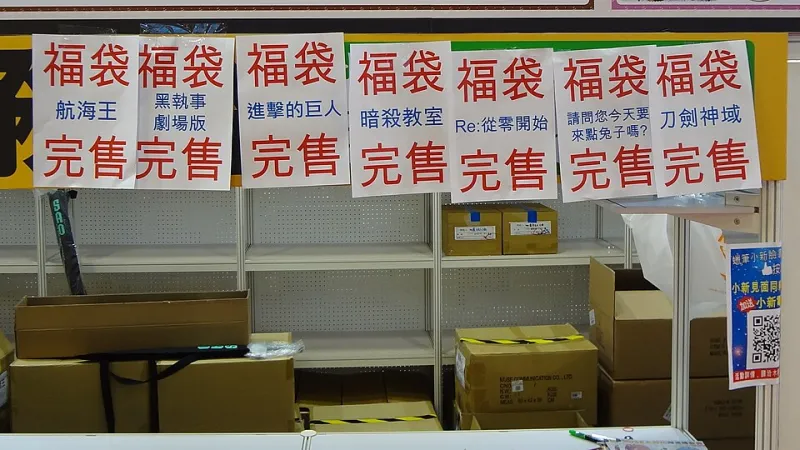
Photo: Solomon203, CC BY-SA 4.0, via Wikimedia Commons
You've been there. The design sat in your browser tab for three weeks. You weren't sure. You thought about it. You told yourself you'd grab it next paycheck. Then you went back — and the page was a 404. Or worse, it was still there but listed at $180 on a resale platform, sold by someone who bought two the morning of the drop and never even opened the bag.
This isn't bad luck. It's architecture.
The Drop Is a Machine, Not a Moment
Most fans experience a merch drop as an event — something that happens to them. But from the other side of the transaction, it's a precisely engineered system designed to manufacture regret as efficiently as it sells product.
Limited availability isn't a logistical reality for most modern merch operations. Print-on-demand technology means a creator could theoretically offer a design indefinitely at zero inventory risk. But they don't. And that choice is intentional.
"Scarcity is the product," says one independent merch producer who's worked with mid-tier YouTube creators and podcasters. "The item itself almost doesn't matter. What you're really selling is the feeling that this thing could disappear. That's what makes people act."
Behavioral economists have a name for this: artificial scarcity. It's not new — luxury brands have deployed it for decades. But the fan merch world has turbocharged the model, compressing the urgency cycle into 24- to 72-hour windows and then letting the secondary market do the rest of the marketing for free.
FOMO Is a Feature, Not a Bug
Here's what the psychology actually looks like in practice. When a drop is announced, fans enter what researchers call a "loss frame" — they're not thinking about gaining something, they're thinking about avoiding missing out. That cognitive shift is significant. People in a loss frame make faster decisions, tolerate higher prices, and experience more intense emotional responses to the outcome.
Creators and their merch teams know this. The countdown timer on a drop page isn't just decorative. The "only 47 left" counter isn't just informational. These are deliberate triggers designed to keep your nervous system in a mild state of panic until you either buy or give up.
And when you give up? That's actually fine for the brand too.
"A sold-out drop that leaves people disappointed is more valuable than a drop that sells through slowly," explains one behavioral economist who studies consumer behavior in creator economies. "The disappointment becomes social content. People post about missing it. That posts reaches people who didn't even know the drop existed. The next drop does better because of the grief from the last one."
The Resale Economy Does the Heavy Lifting
Once a design goes offline, something interesting happens. The secondary market — StockX, Depop, eBay, or just some guy's Linktree — takes over, and the prices it generates tell a story the brand gets to point at without having set them.
A $38 tee listed at $120 on resale isn't just an annoyance to the fan who missed it. It's a data point that the brand can use in its next drop announcement. "Last time, resale hit 3x retail." That sentence alone is a marketing campaign.
For fans, the resale premium creates a strange rationalization loop. Paying $120 for something that cost $38 six weeks ago feels like a loss — but it also feels like proof that the item was worth wanting. The price validates the desire. And for a certain type of collector, that validation is part of what they're buying.
"I've definitely paid resale on stuff I could've had at retail if I'd been faster," admits one fan collector who asked to remain anonymous. "And I've told myself it's fine because obviously it was worth it — look at what people are paying. Which is insane logic, but it works on me every time."
The Line Between Exclusive and Exploitative
Not everyone in the merch industry is comfortable with how far these tactics have drifted. There's a meaningful difference between a genuinely limited run — a design produced once, in a fixed quantity, as a collector's item — and a design that's artificially pulled from sale to manufacture demand for a future restock.
Some creators have started getting backlash for the latter. Fans who discover that a "sold out forever" item quietly restocked six months later, or that the scarcity was never real to begin with, tend to feel manipulated. And in fandom communities, that feeling spreads fast.
"The trust erosion is real," the merch producer says. "If your audience figures out that the scarcity is fake, you don't just lose a sale. You lose credibility. And in a space where everything runs on parasocial trust, that's a much bigger problem."
The brands that seem to thread the needle most successfully are the ones that are transparent about their model. Some creators openly explain their drop structure — this design runs for 72 hours, then it's gone, no restock, no exceptions. That honesty reframes the urgency from manipulation to a clear value proposition: if you want it, here's your window.
Why Fans Keep Playing Along
So why does any of this work? Why do people who understand exactly how the machine operates still feed it?
Part of it is that the merch, for true fans, represents something beyond the object. It's a timestamp. Owning the drop from a specific era of a creator's career is a form of participation — proof that you were there, that you were paying attention. The scarcity isn't just a sales tactic; it also creates the conditions for that meaning to exist. If everyone had it, it wouldn't mean the same thing.
And part of it is simpler than that. The designs are often genuinely good. Minimal, iconic, the kind of thing you'd wear even if you weren't a fan. When something is both aesthetically strong and emotionally loaded, the math changes. You're not just buying a shirt. You're buying a piece of something you care about, in a form that holds up on its own.
That combination — cultural weight plus real design quality — is what separates the merch drops people chase for years from the ones that end up in a discount bin. The scarcity tactics are real. But they work best when they're wrapped around something that actually deserved to be wanted in the first place.
The Takeaway
If you've ever felt played by a merch drop, you weren't wrong. The system is built to make you feel exactly that way — and then to make you come back anyway. Understanding the mechanics doesn't fully neutralize them, but it does give you something: the ability to decide when the item is genuinely worth the chase and when you're just reacting to a countdown timer.
Sometimes the hoodie is worth $120 on resale. Sometimes it isn't. The difference is whether you're buying the thing or buying the feeling of having almost missed it.
Only one of those is a purchase you'll be happy about in six months.