Dead and Dearer: Why the Merch You Can't Buy Anymore Means More Than Anything in Your Cart Right Now
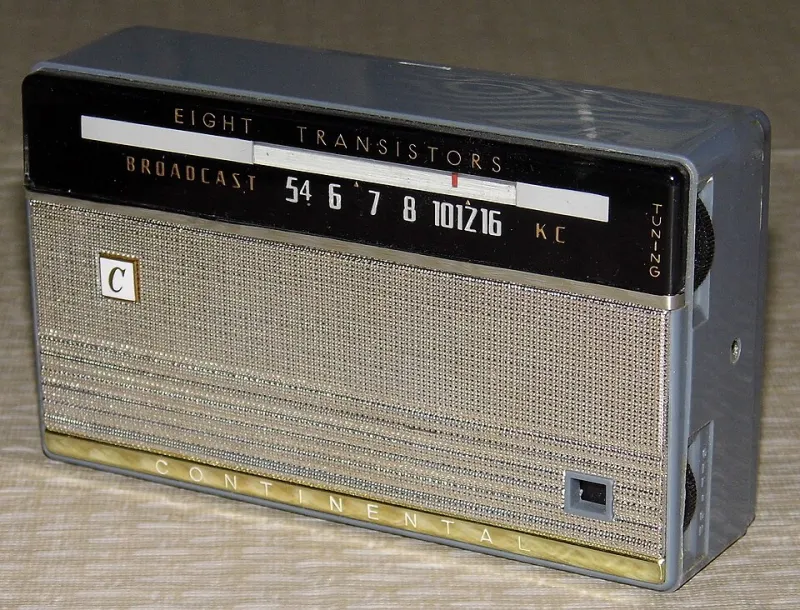
Photo: Joe Haupt from USA, CC BY-SA 2.0, via Wikimedia Commons
You've got a drawer somewhere — maybe a shelf, maybe a carefully labeled bin — where it lives. A hoodie from a run that ended without warning. A pin set from a creator who quietly pivoted. A tee that dropped during a specific, unrepeatable moment in a fandom's timeline. You didn't think much of it when you bought it. Now you'd sooner lose your laptop.
This isn't nostalgia in the soft, greeting-card sense. It's something sharper. Something that kicks in specifically because the item is no longer available, not in spite of it. And once you understand the mechanics behind it, you'll never look at your collection — or a live drop — the same way again.
The Moment the Cart Empties for Good
When a brand discontinues a line, something shifts in the fan brain almost immediately. The item goes from being a purchase to being an artifact. That's not a small distinction. Purchases exist in a world of replaceable things. Artifacts exist outside of commerce entirely.
Psychologists call part of this the endowment effect — the well-documented tendency for people to assign more value to things they already own than to identical items they don't. But discontinuation turbocharges it. The moment an item becomes truly unobtainable, ownership stops being a transaction outcome and starts being a kind of custodianship. You're not just a person who bought something. You're one of the last people who could.
That reframing does real psychological work. It transforms the object from consumer good to cultural document.
Obscurity as Identity
Here's where it gets genuinely interesting for anyone paying attention to how fandoms operate: obscurity, in the right context, functions as social currency.
Wearing a tee from a dead drop isn't the same as wearing merch from a current, widely available line. The discontinued piece carries information — about when you were paying attention, how deep you've been in it, how long you've held on. It signals commitment in a way that a fresh cart checkout simply cannot replicate.
In tight-knit fandoms, that signal gets read immediately. Someone spots the colorway, the print location, the specific logo variant that only existed for six months back in 2019, and the conversation that follows isn't about the item. It's about shared history. The merch becomes a handshake.
Active drops, no matter how well-designed, can't manufacture that. They're available to anyone with a credit card and decent wifi right now. The graveyard piece is available to no one. That asymmetry is the whole point.
Why Killing a Line Accidentally Creates Its Most Devoted Audience
Brands rarely discontinue product lines with the intention of building mystique. Usually it's the opposite — slow sales, licensing complications, a pivot in creative direction, or just the quiet decision to stop throwing resources at something that isn't converting. The irony is that the discontinuation itself often does more for cultural longevity than any marketing campaign could have.
Think about how many cult-status pieces exist specifically because they were killed off. The item that got discontinued before the brand blew up. The collab that ended when one party walked away. The limited run that sold out and was never restocked, then never revisited. In each case, scarcity wasn't engineered for hype — it just happened. And the result was the same: the piece outlived the moment and became something fans organize their identity around.
For collectors, there's also a practical dimension. A discontinued item has a fixed ceiling on supply. No surprise restock, no anniversary reprint, no "by popular demand" revival is coming. The quantity in the world is what it is. That finality gives the piece a kind of integrity that open-edition merch will never have, no matter how good it looks.
The Grief Loop That Makes It Stick
It sounds dramatic to use the word grief about merchandise. But the emotional sequence fans go through when a product line dies tracks pretty closely to actual loss psychology.
First there's the denial phase — checking the site repeatedly, convinced the item is just out of stock rather than gone. Then frustration, usually expressed loudly in Discord servers or comment sections. Then a period of bargaining, which in merch terms looks like scouring resale platforms and DMing strangers on Reddit. And finally, if the item was acquired before the end or found on the secondary market, something that functions a lot like acceptance — but an acceptance that's fused with fierce protectiveness.
That emotional journey leaves a mark. You don't go through all of that for something you're indifferent to. By the time a fan has fought to own or keep a discontinued piece, the object has absorbed all of that effort and feeling. It becomes dense with meaning in a way that a clean, easy purchase never does.
What This Means If You're Building a Collection
If you're serious about collecting — not just accumulating — this dynamic is worth thinking about deliberately. The pieces that will matter most in five years are rarely the ones that feel most exciting in the cart right now. They're the ones that are closest to the edge of availability. The run that's winding down. The collab that's almost certainly not getting renewed. The brand that's been quiet in a way that feels permanent.
Paying attention to those signals isn't morbid. It's just how collecting works at the level where it actually means something. You're not shopping. You're documenting a moment before it closes.
And if you already own something from a dead drop? Take care of it. Not because it's necessarily worth money — though it might be — but because you're probably holding something that nobody new can ever get. That's rarer than most people realize, and rarer still is the feeling that comes with it: the quiet certainty that what you're holding is, in its small way, irreplaceable.
The shop page is gone. The item isn't. That's the whole story.