You Don't Miss the Creator. You Miss the Drop.
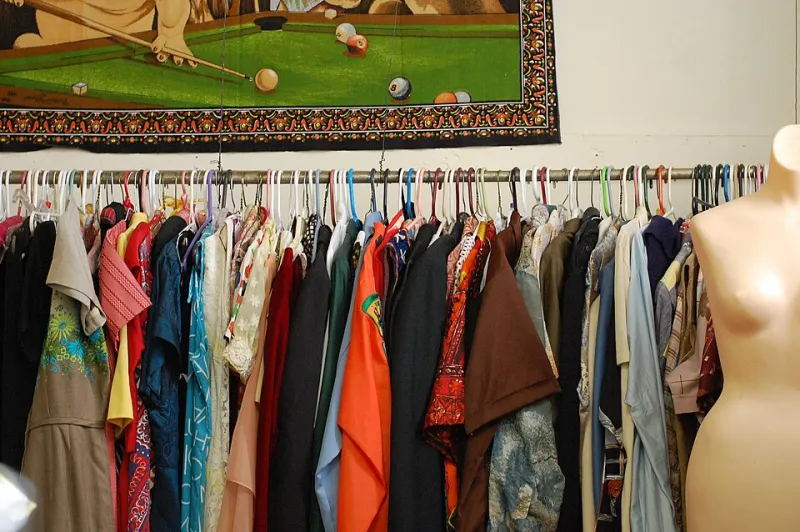
Photo: Stacie, CC BY-SA 2.0, via Wikimedia Commons
Ask someone who was deep into a specific merch era what they miss most about it, and watch what happens. They won't say the artist's name first. They'll say something like, "that slate gray crewneck from the second collection" or "the one with the embossed logo, not the printed one." The creator is almost an afterthought. What they're mourning is the object—the specific, unrepeatable object—and everything it represented at that exact moment in time.
This is the merch graveyard effect. And it's more common, and more emotionally loaded, than most people want to admit.
When the Drop Becomes the Thing Itself
There's a reason collectors talk about "eras" the way music critics talk about albums. A merch drop isn't just product. It's a document. It captures a specific aesthetic moment—the typeface someone chose, the colorway that was trending that season, the decision to use a heavier cotton blend or go with a washed finish. Those choices are a form of expression, and fans read them the way they'd read liner notes.
When that era ends—when the shop goes dark, the collection gets archived, or the brand pivots to something completely different—it doesn't just mean the stuff is gone. It means the language is gone. The visual vocabulary that fans had learned to speak fluently just got discontinued.
That's a surprisingly specific kind of loss. And it doesn't require any personal relationship with the creator to feel it.
Parasocial Attachment Has a New Object
We talk a lot about parasocial relationships in the context of creators themselves—the way fans feel close to YouTubers, streamers, musicians, or athletes they've never met. But parasocial attachment doesn't stop at people. It extends to the artifacts those people produce.
A limited run hoodie from a creator's early days isn't just merch. For the fan who bought it at a small show in 2018 or snagged it during a 48-hour drop window, it's a physical anchor to a specific version of their own life. The object holds memory in a way the creator's current output simply can't replicate. And when the line is discontinued—when that particular design era becomes officially unreachable—the loss feels personal in a way that's hard to articulate to anyone who wasn't there.
Psychologists call this object attachment, and it's well-documented in everything from childhood comfort items to vintage clothing culture. The merch world just hasn't caught up to how seriously it operates in fandom spaces.
The Brand Pivot Problem
Here's where things get genuinely complicated. A lot of the grief fans feel over dead drops isn't triggered by a creator disappearing—it's triggered by a creator evolving. The brand pivots. The aesthetic shifts. Maybe they hired a new designer, signed with a bigger label, or just grew out of the visual identity their early fans fell in love with.
For collectors, this can feel worse than the creator going quiet entirely. At least dormancy is neutral. A pivot is active. It's a statement that the old era wasn't worth continuing. Fans who built a collection around that specific look suddenly find themselves holding artifacts from a chapter the creator has officially closed.
And the secondary market reflects this almost immediately. Pieces from "early era" drops spike in resale value the moment a brand announces a rebrand or aesthetic shift. The market is pricing in scarcity, sure—but it's also pricing in grief. People who missed the original drop will pay a premium to access something they feel they should have been part of.
Why Some Drops Become Legends and Others Just Disappear
Not every discontinued merch line achieves cult status. Some drops fade quietly into the past without anyone mounting a Reddit crusade to bring them back. The ones that become legends tend to share a few characteristics.
First, they were coherent. The best-remembered drops had a clear visual identity—everything felt like it belonged together, like someone had a real point of view when they put it together. Second, they were limited enough to create scarcity without being so exclusive that most fans never had access. And third, they arrived at a moment when the fandom itself was at peak intensity—when everyone was paying attention, when the community was most alive.
When all three of those things align, the drop doesn't just become product. It becomes a shared cultural reference point. "Did you have the [x] collection?" becomes a way of establishing who was really there, who understood the moment when it was happening.
Losing access to that reference point—watching it become something only resellers and serious collectors can touch—changes the community's relationship to its own history.
The Archive Problem Nobody's Solving
Here's the frustrating part: most of this stuff just disappears. Unlike music, which gets catalogued and streamed, or film, which gets preserved and re-released, merch drops exist in an archival no-man's-land. A few people have the physical pieces. Some blurry product photos survive on old Instagram posts. Maybe there's a fan wiki with a partial catalog.
But the experience of a drop—the moment it was available, the community reaction, the context that made it meaningful—that evaporates almost immediately. And unlike a song or a movie, you can't just re-release a production run from five years ago and have it mean the same thing. The moment is gone. The artifact is all that's left.
This is part of why fans mourn drops so intensely. They're not just mourning an item they can't buy. They're mourning an irreproducible moment in their fandom's history that has now been permanently locked away behind the resale market's velvet rope.
What Collectors Are Really Holding Onto
If you've got a piece from a discontinued era—something from a run that's never coming back—you probably already know this feeling. It's not quite nostalgia. It's more like stewardship. You're holding a document of something that mattered, at a time when it mattered, to a community that doesn't fully exist in the same form anymore.
That's a lot of weight for a crewneck to carry. But that's kind of the point, isn't it? The best merch was never just merch. It was always a container for something bigger—an era, a feeling, a version of a fandom that existed for a specific window of time and then moved on.
You don't miss the creator. You miss the drop. And honestly? That's not a lesser kind of grief. It might actually be a more honest one.