Shelf Confessions: What Your Old Merch Knows About You That You've Forgotten
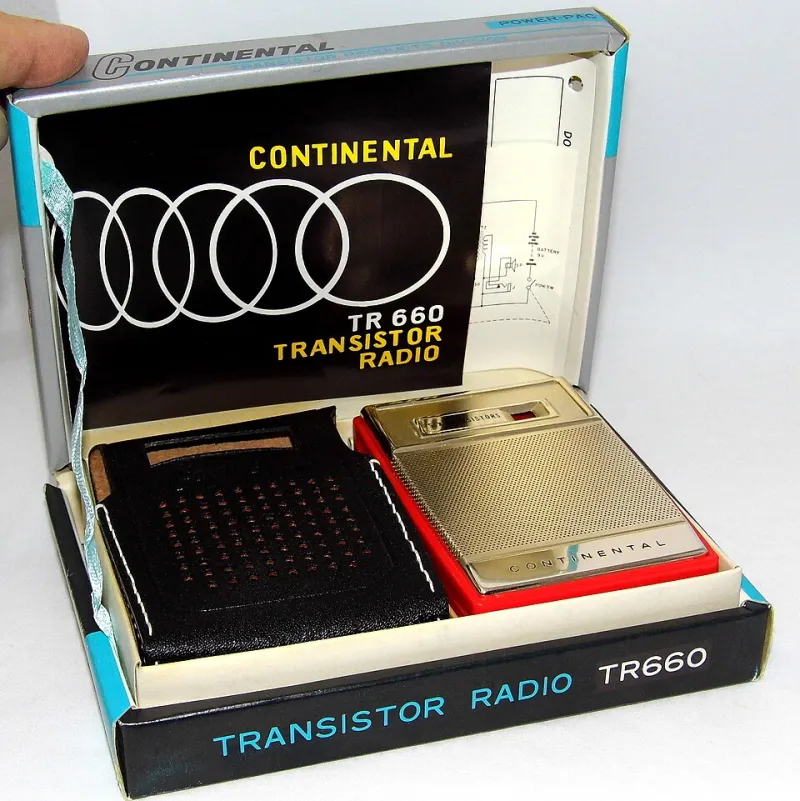
Photo: Joe Haupt from USA, CC BY-SA 2.0, via Wikimedia Commons
Somewhere in your place — maybe a closet shelf, maybe a storage bin, maybe a drawer you haven't opened since you moved — there's a piece of merch that used to mean everything. You remember the drop. You remember the wait. You remember the specific kind of excitement that came with tearing open that envelope or unboxing that package for the first time.
Now you look at it and feel almost nothing. Or worse: something complicated.
That's not a malfunction. That's your collection doing its actual job.
Merch as Memory
We talk about fan merchandise like it's just stuff. A tee. A pin. A hoodie with a logo. But anyone who's been collecting long enough knows that's not the whole story. Every item you've ever bought carries a timestamp — not just a date, but a version of you. The person who bought that drop in 2017 was operating on completely different emotional software than whoever you are right now.
Collections are unintentional autobiographies. You didn't sit down and say, "I'm going to document my entire fandom evolution through consumer purchases." You just wanted the hoodie. But years later, lined up together on a shelf or folded in a box, those purchases form a timeline that's shockingly accurate. Fandoms you grew out of. Creators you defended publicly and now cringe remembering. Limited drops you overpaid for during a phase you'd rather not explain at dinner.
The collection doesn't lie. That's the thing. It just sits there, quietly holding receipts.
The Archaeology of the Obsessed
Think about what a merch archaeologist would find if they dug through your collection layer by layer, oldest on the bottom, newest on top. The earliest stuff probably tells a story of pure, uncomplicated enthusiasm — the merch you bought because you were fully in it, no reservations. Those pieces have a particular energy. Simple. Direct. You wanted it, you got it, you loved it.
Then somewhere in the middle layers, things get messier. There are items tied to fandoms that went sideways — creators who disappointed, communities that turned toxic, moments where the thing you loved stopped feeling like yours. You kept the merch anyway, because getting rid of it felt like admitting something. What exactly? That you were wrong? That you wasted money? That you're allowed to change?
And then the newer stuff, sitting on top, which represents whoever you are now — more selective, probably more expensive taste, a little harder to impress. You've been burned enough times to know what a cash-grab drop looks like. You wait. You think. And then sometimes you still buy it anyway, because being obsessed is not a condition that responds well to logic.
The Discomfort of the Old Drop
Here's where it gets genuinely weird: the pieces that no longer resonate aren't always the ones you regret. Sometimes the discomfort isn't "I can't believe I bought that." Sometimes it's something quieter and harder to name — a kind of distance between you and the person who would have worn that shirt without a second thought.
That distance is growth, obviously. But growth doesn't always feel triumphant. Sometimes it feels like loss. Because when you hold up a piece of merch from a fandom you've left behind, you're not just looking at a product. You're looking at a community you used to belong to, an identity you used to wear, a version of yourself that was genuinely happy in a context that no longer fits.
Keeping that piece is complicated. It's not nostalgia exactly — it's more like preserving evidence. Proof that you were that person. Proof that the enthusiasm was real, even if it's gone now.
To Keep or Not to Keep
This is the question that serious collectors eventually have to answer, and there's no universal right call.
Some people keep everything. The logic is straightforward: the collection is the record, and editing it means falsifying the history. The pieces you've outgrown are part of the story. A shelf that only shows your current tastes isn't a collection — it's a curated performance. The weird, embarrassing, outdated stuff is what makes it real.
Other people purge ruthlessly, and there's something honest about that too. Keeping merch you no longer connect with just to prove you once did — is that honoring your past self, or is it holding yourself hostage to it? There's a version of collecting that becomes less about love and more about guilt. You don't display it. You don't wear it. You just can't bring yourself to let it go, which isn't the same thing as cherishing it.
And then there's a middle path that a lot of collectors land on eventually: intentional archiving. The piece goes in a box, properly stored, acknowledged but not displayed. You're not pretending it doesn't exist, but you're also not letting it take up real estate in your present. It's there if you ever want to revisit it. It's not gone. It's just... filed.
What the Collection Is Actually Tracking
Here's the reframe that changes how you look at all of it: your collection isn't just tracking fandoms. It's tracking your relationship to belonging.
Every drop you bought was, at some level, a bid for membership. You were saying: I'm in. I'm here. I believe in this enough to put money on it. And the things you believed in — the creators, the communities, the aesthetics — they tell you something about what kind of belonging you were looking for at each stage of your life. The loud, maximalist stuff from your early collecting days. The quieter, more minimal pieces you gravitate toward now. The shift from logo-heavy to almost nothing on the front. That's not just changing taste in design. That's a changing relationship with how visible you want your devotion to be.
The Shelf as Mirror
Most people don't think of their merch as self-portrait material. But spend an afternoon with your full collection — not just the stuff you rotate, but the bins, the boxes, the forgotten corners — and see what you find.
You'll probably find joy. Definitely some cringe. Maybe a little grief. A few pieces that make you proud in a way that's hard to articulate. Some you forgot you even owned. Some you'll immediately want to wear again. Some you'll finally feel ready to release.
All of it is you. The current version and every version before. The obsessed, the evolving, the occasionally misguided fan who kept showing up anyway.
The collection doesn't care if you've changed. It just keeps the record. What you do with it is up to you.